

POLYNUCLEOTIDES 28 Jul 2026 6 min read
Beyond Filler: A Guide to Regenerative Injectables
Injectables can do far more than add volume or relax muscles. We explore the growing world of regenerative injectables, from polynucleotides and PRP to biostimulators and Profhilo Structura, and how each works differently within the skin and underlying tissues.
A growing area of aesthetic medicine focuses instead on improving the quality of the skin and underlying tissues, using treatments that support repair, stimulate collagen or encourage regenerative processes over time.
At SKINMENU, this includes treatments such as polynucleotides, PRP, biostimulators and Profhilo Structura.
They’re often grouped together under terms such as “regenerative injectables”, but they work in very different ways and target different aspects of the ageing process.
So what does “regenerative” actually mean, and how do you know which treatment is right for you?
What are regenerative injectables?
“Regenerative” has become an increasingly popular term in aesthetics, but it can cover a broad range of treatments.
Rather than relying solely on the material injected to create an immediate cosmetic change, these treatments aim to influence the skin or underlying tissues themselves.
Depending on the treatment, that might mean supporting cellular repair, stimulating collagen production, improving hydration or encouraging changes within the tissue over time.
The results therefore tend to develop progressively.
Rather than simply asking “What can we inject here?”, we can ask a more useful question: “Which tissue are we trying to improve, and what do we want it to do?”
How are they different from dermal filler?
Dermal fillers, most commonly made from hyaluronic acid, are primarily used to create or restore volume, contour and structural support.
Regenerative and biostimulatory injectables have a different purpose.
While some may produce an initial effect following injection, much of their benefit is intended to develop through the biological response that follows. The goal may be better skin quality, increased collagen production or improvement in the underlying tissues rather than simply adding volume.
This doesn’t make one approach better than the other. They are different tools for different concerns.
Polynucleotides: supporting skin repair
Polynucleotides have become one of the most talked-about injectable treatments in recent years.
They contain purified polynucleotide fragments that are injected into the skin, where they are used to support tissue repair and improve skin quality.
Over a course of treatment, polynucleotides can help improve hydration, elasticity and the overall appearance of the skin.
One of their most popular applications is the under-eye area, where the skin is naturally thin and adding volume isn’t always what is needed.
They can also be used across the face, neck and other areas where improving skin quality is the priority.
The important distinction is that polynucleotides aren’t designed to behave like dermal filler. We aren’t using them to create projection or replace significant volume. The focus is on improving the quality of the tissue itself.
PRP: harnessing your own platelets
PRP, or platelet-rich plasma, takes a different approach.
A small amount of your own blood is taken and processed to concentrate the platelet-rich component of the plasma before being injected back into the treatment area.
Platelets release growth factors involved in the body’s normal healing and tissue-repair processes.
Within aesthetics, PRP can be used to support skin rejuvenation and improve overall skin quality. It can also be used as part of a treatment plan for hair thinning.
Because PRP comes from your own blood, there is no synthetic injectable product being introduced into the treatment area.
At SKINMENU, we may also combine PRP with treatments such as laser or microneedling when appropriate, allowing us to target different components of a skin concern as part of a wider treatment plan.
Biostimulators: encouraging collagen production
Biostimulators work differently again.
Rather than primarily creating their result through the physical presence of an injectable gel, biostimulatory treatments are designed to stimulate your tissues to produce more of their own collagen.
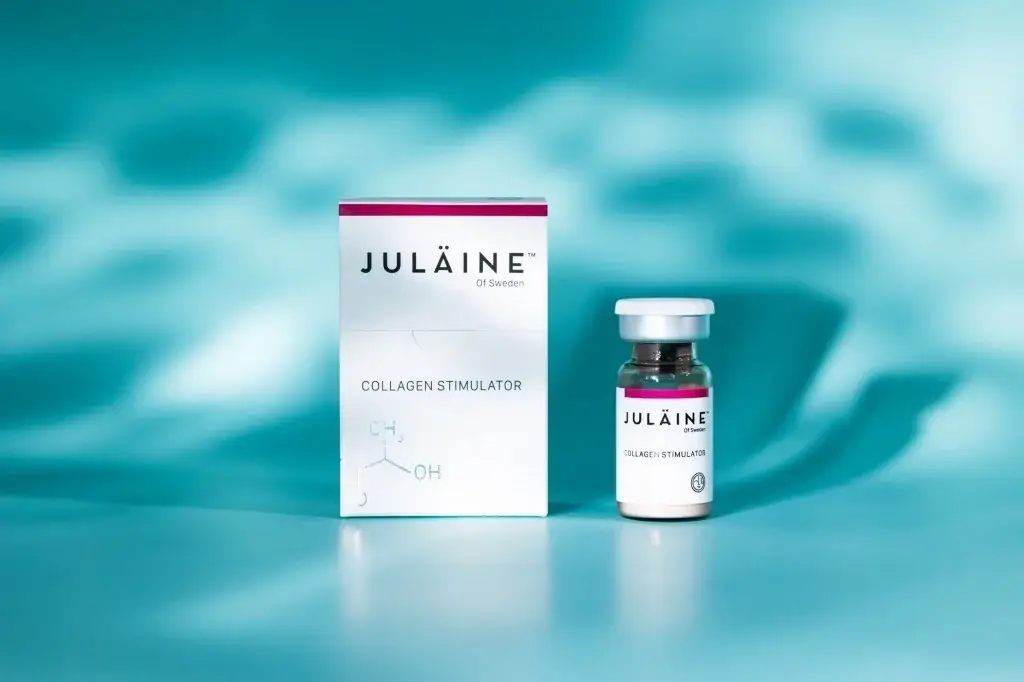
At SKINMENU, one of the biostimulatory treatments we use is JULAINE, a poly-L-lactic acid, or PLLA, injectable.
Following treatment, the body’s response to the injected material stimulates collagen production. Improvements therefore develop progressively over the following weeks and months rather than appearing as an immediate final result.
Biostimulators can be particularly interesting when the aim is gradual improvement in tissue quality and support.
The injection is only the beginning of the process.
Profhilo Structura: looking beneath the skin
Profhilo Structura sits slightly differently within this conversation.
It is a highly concentrated hyaluronic acid injectable, but it isn’t used in the same way as conventional dermal filler.
Structura is designed to be injected within the superficial facial fat compartments, which can undergo changes as we age and contribute to changes in facial support and contour.
Rather than simply filling an individual line or creating projection, the treatment is intended to work within these superficial fat compartments.
This is particularly interesting because what appears to be a “skin” concern isn’t always originating within the skin itself. Ageing occurs across multiple layers of the face, including the skin, fat, muscle and bone.
Understanding which layer is contributing to the change helps us choose the appropriate treatment.
Which regenerative injectable is best?
There isn’t one.
Despite often being discussed together, these treatments aren’t interchangeable.
If your priority is improving the quality of delicate under-eye skin, polynucleotides may be considered.
If you want a treatment derived from your own blood and its platelet-derived growth factors, PRP may be appropriate.
If the aim is progressive collagen stimulation, a biostimulator may make more sense.
If changes within the superficial facial fat compartments are contributing to facial ageing, Profhilo Structura may be considered.
And for some patients, more than one approach may have a role because each treatment is targeting something different.
Why we look at the tissue, not just the treatment
Having more injectable options is only useful if we understand when to use them.
At SKINMENU, we don’t start by choosing a product.
We look at what is creating the concern. Is it the quality of the skin? Collagen loss? Changes within the facial fat? Volume loss? Or a combination of several factors?
From there, we can decide which treatment, or combination of treatments, makes sense for you.
Because the future of injectables isn’t simply about adding more.
It’s about understanding what we’re treating, which tissue we’re targeting and how we want that tissue to respond.
Keep reading