

LASERS 10 Jun 2026 6 min read
The Best Treatments for Hyperpigmentation
Not all hyperpigmentation is the same, and treating it effectively starts with understanding why it’s there. We break down the treatments we use for hyperpigmentation, from skincare and chemical peels to advanced laser treatments.
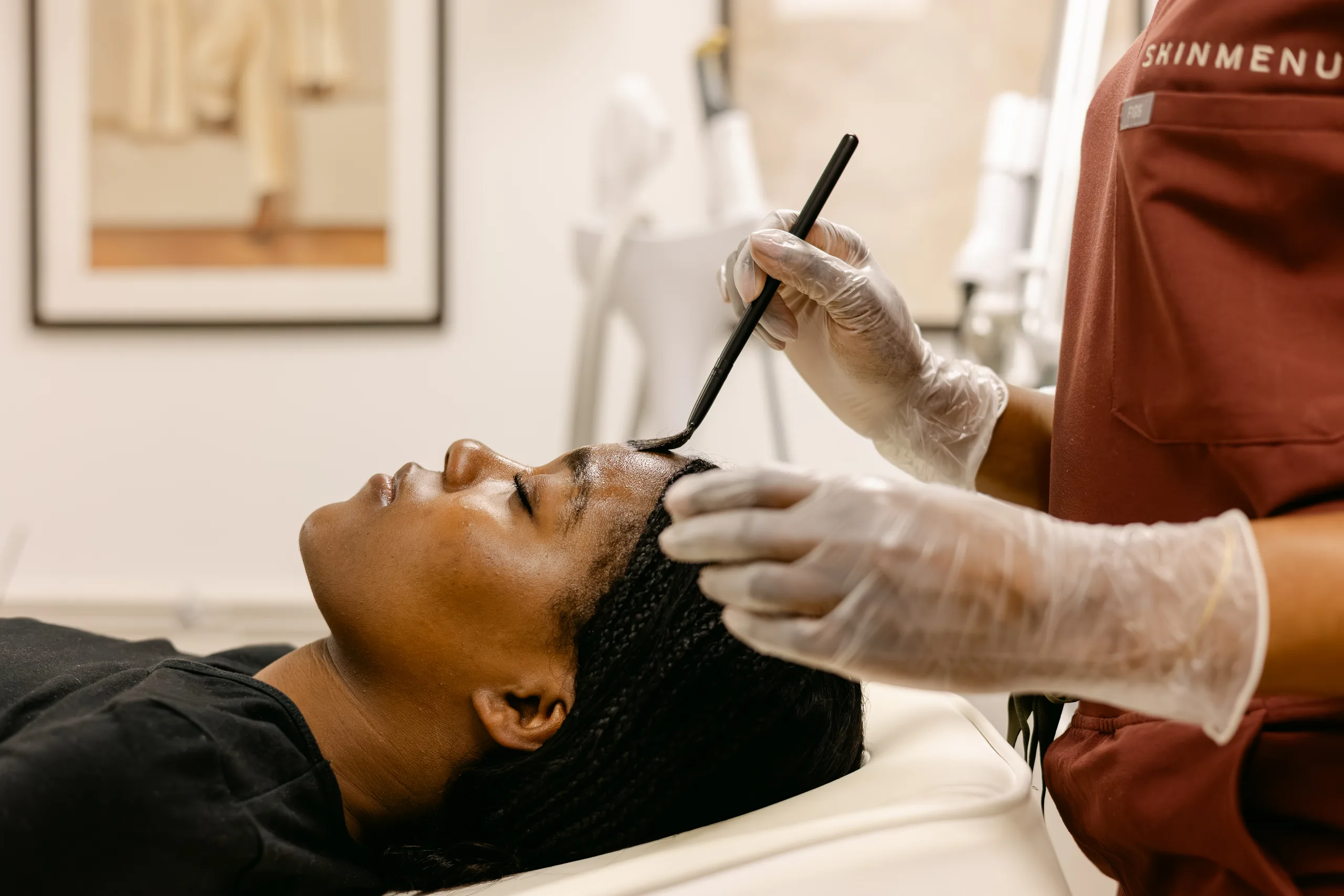
Hyperpigmentation is one of the most common skin concerns we see at SKINMENU, but treating it isn’t as simple as reaching for a brightening serum or booking a laser.
Dark marks can develop for several reasons, from acne and inflammation to sun exposure, hormones and skin injury. And while they may look similar, they don’t necessarily respond to the same treatments.
The first step to treating pigmentation effectively is understanding what type of pigmentation you have, what is driving it and where that pigment sits within the skin.
What causes hyperpigmentation?
Hyperpigmentation occurs when the skin produces or deposits excess melanin, the pigment responsible for the colour of our skin, hair and eyes.
Common causes include:
- Post-inflammatory hyperpigmentation (PIH): dark marks left behind following acne, irritation, burns, skin treatments or other inflammation
- Sun-induced pigmentation: including freckles, sun spots and areas of uneven pigmentation caused by cumulative UV exposure
- Melasma: a more complex form of pigmentation commonly influenced by hormones, UV exposure and heat
- Acne-related pigmentation: the brown or grey marks that can remain long after an active breakout has settled
Your natural skin tone also matters. Melanin-rich skin has a greater tendency to develop PIH following inflammation, which makes appropriate treatment selection particularly important.
So, what are the best treatments for hyperpigmentation?
There isn’t one.
At SKINMENU, we treat hyperpigmentation according to its cause, depth and your individual skin. Often, the best results come from combining treatments rather than relying on one modality alone.
1. Targeted skincare
Hyperpigmentation treatment starts at home.
Ingredients that regulate melanin production, encourage cell turnover and reduce inflammation can gradually improve existing pigmentation while helping to reduce the formation of new dark marks.
Depending on your skin, your regime may include ingredients such as:
- Retinoids
- Azelaic acid
- Vitamin C
- Tranexamic acid
- Alpha arbutin
- Kojic acid
- Hydroquinone, when clinically appropriate
Skincare can also play an important role in preparing the skin before procedures such as laser and chemical peels.
At your SKINMENU Consultation, we can create a tailored skincare regime based on your skin, concerns and planned treatments, including prescription skincare where appropriate.
2. Pico Laser
Pico Laser is one of our go-to treatments for hyperpigmentation at SKINMENU.
The technology delivers extremely short pulses of laser energy to target unwanted pigment within the skin. This breaks pigment into smaller particles that can gradually be cleared by the body.
Depending on the pigmentation being treated, Pico can be used for concerns including:
- Post-inflammatory hyperpigmentation
- Sun-induced pigmentation
- Freckles and sun spots
- Uneven skin tone
- Pigmentation left behind by acne
One of the reasons we use Pico extensively at SKINMENU is its versatility. Different wavelengths and treatment settings allow us to tailor treatment according to the pigment being targeted and the patient’s skin tone.
However, more energy does not necessarily mean better results. Hyperpigmentation can worsen when the skin is unnecessarily irritated or overheated, particularly in skin that is prone to PIH.
Careful treatment selection and settings matter.
3. Chemical Peels
Chemical peels use carefully selected acids to encourage controlled exfoliation and skin renewal.
For hyperpigmentation, they can help lift superficial pigment while improving overall clarity and tone. Different acids penetrate to different depths and have different properties, which means the peel should be selected according to your skin rather than simply choosing the “strongest” option.
Peels can be particularly useful for post-acne hyperpigmentation and uneven skin tone and may also be incorporated into a wider treatment plan alongside skincare or laser.
4. Laser Genesis
Laser Genesis isn’t primarily a pigment-targeting laser, but it can still have an important place within a pigmentation treatment plan.
The treatment gently heats the dermis using a 1064 nm wavelength, helping to improve overall skin quality while targeting redness and inflammation.
This can be particularly useful when hyperpigmentation exists alongside active acne, redness or an uneven complexion.
For some patients, we combine Laser Genesis with other treatments rather than asking one device to do everything.
5. IPL
IPL, or Intense Pulsed Light, can be highly effective for certain types of superficial sun-induced pigmentation.
Unlike a laser, IPL emits a range of wavelengths of light. The light is absorbed by pigment within the skin, causing targeted areas to darken temporarily before gradually shedding.
However, IPL is not appropriate for every skin tone or every type of pigmentation. Higher levels of epidermal melanin increase the risk of unwanted heating, burns and further pigmentation.
This is why appropriate patient selection is essential.
What about melasma?
Melasma deserves its own category.
While melasma presents as pigmentation, its behaviour is more complex than a straightforward sun spot or post-acne mark. It has hormonal, vascular and environmental influences and can be aggravated by UV exposure, visible light, heat and inflammation.
For this reason, aggressively targeting melasma with procedures can sometimes make it worse.
Treatment usually focuses on control rather than cure, with consistent sun protection, pigment-regulating skincare and carefully selected procedures forming part of a longer-term management plan.
Why does hyperpigmentation sometimes get worse after treatment?
Ironically, inflammation itself can stimulate pigment production.
This means a treatment intended to improve hyperpigmentation can cause further hyperpigmentation if it creates excessive inflammation within the skin.
This is particularly relevant for patients with darker skin tones or a history of post-inflammatory hyperpigmentation.
It is why we consider much more than simply whether a treatment is capable of targeting pigment. We also consider your skin tone, pigmentation history, current skincare, recent sun exposure and how your skin is likely to respond to the treatment.
Sometimes, preparing the skin first is more important than treating it immediately.
Don’t forget SPF
No hyperpigmentation treatment plan is complete without sun protection.
UV exposure stimulates melanin production and can cause existing pigmentation to become darker again, even after successful treatment.
Daily broad-spectrum SPF should therefore be considered part of your hyperpigmentation treatment, not an optional extra.
For patients prone to melasma or pigmentation, we may also recommend additional strategies to reduce exposure to visible light depending on the individual.
Which hyperpigmentation treatment is right for me?
The best treatment depends on what is causing your pigmentation, how deep it is, your skin tone and how your skin behaves.
For one patient, the starting point may be calming the skin first with Laser Genesis. For another, it may be Pico Laser. Others may benefit from a combination of skincare, peels and laser treatments over time.
At your SKINMENU Consultation, we assess your skin and hyperpigmentation before creating a treatment plan tailored to you.
Because when it comes to hyperpigmentation, the goal isn’t simply to treat the dark mark you can see. It’s to understand why it’s there in the first place and how we can treat it without creating more.
Keep reading